
A Beginner's Guide to Using Binoculars for Birds
Why Binoculars Change Everything
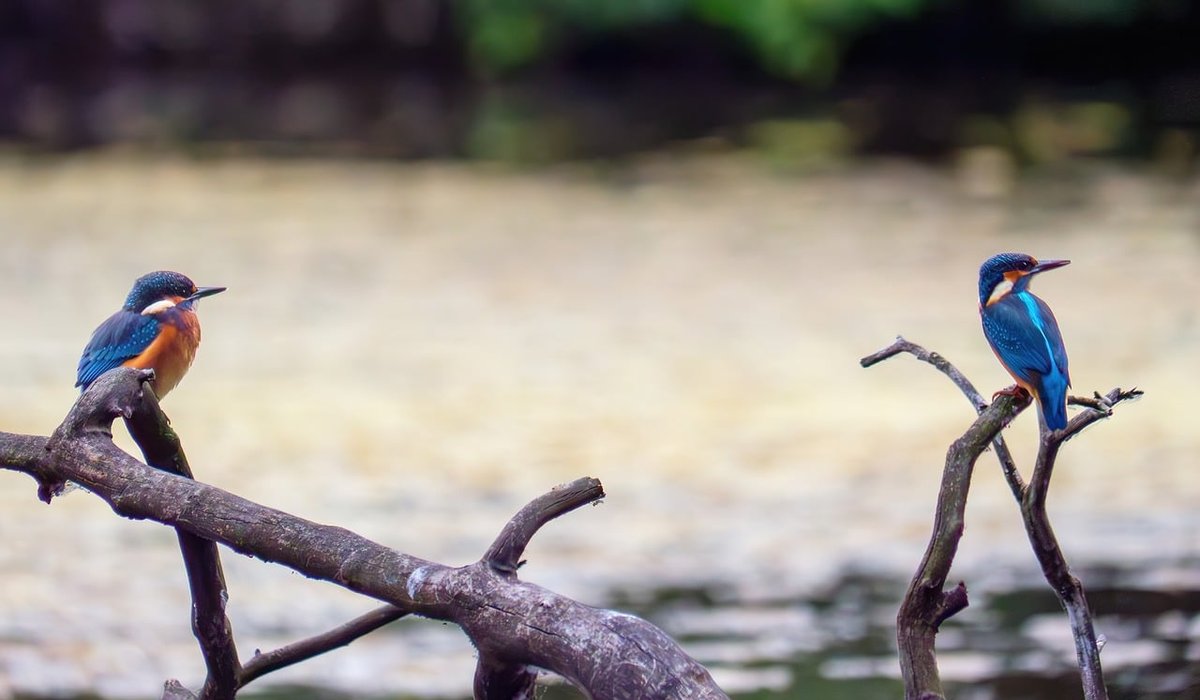
There is a moment every new birder remembers: the first time a pair of binoculars turns a distant smudge on a reedbed into a kingfisher. Without them, you are limited to whatever wanders within a few metres. With them, a whole reserve opens up. Suddenly the far side of the lake is reachable, the tops of the oaks are readable, and that little brown job skulking in the willow scrub has a face, a beak and an identity.
The good news is that you do not need to spend a fortune or learn optical engineering. You need a pair that suits your eyes, your hands and the places you actually visit. This guide walks you through choosing, holding and using them properly, with plenty of attention to wetland and woodland birds.
Understanding the Two Numbers
Almost every binocular is described by two figures, such as 8x42 or 10x25. The first number is the magnification: how many times larger the image appears. The second is the diameter of the front lens in millimetres, which governs how much light reaches your eye.
More magnification is not automatically better. At 10x, every tremor in your hands is magnified too, and the view narrows, making it harder to find a bird flitting through a hedgerow. For most beginners, 8x is the sweet spot: bright, steady and forgiving. A larger front lens (42mm rather than 25mm) gathers more light, which matters enormously at dawn and dusk, the very hours when owls, otters and roosting wildfowl are most active.
- 8x42 — the classic all-rounder for woodland and wetland.
- 8x32 — lighter for long walks, slightly less bright at dusk.
- 10x42 — good for open water and estuaries, if you have steady hands.
- 8x25 or 10x25 — compact and pocketable, but dim in poor light.
Hold Them Properly and the Birds Will Come
Most beginners hold binoculars the way they hold a camera, and then wonder why the image swims. There is a better way. Bring the eyecups close to your brow, rest your thumbs beneath the barrels, and wrap your fingers over the top. Your hands and forehead together form a stable tripod. Tuck your elbows in against your ribs rather than letting them float.
If you wear glasses, keep them on. Look for binoculars with twist-down eyecups and reasonable eye relief (15mm or more), which lets you see the full field of view without pressing the lenses against your specs.
Before you lift the binoculars, find the bird with your naked eye and note a landmark beside it — a dead branch, a reed stem, a patch of bright gravel. Then raise the binoculars to your face without moving your head. Trying to sweep the landscape while looking through the tubes is the single most common beginner frustration, and it vanishes once you learn the landmark trick.
Reading a Wetland Full of Birds
Wetlands can overwhelm the senses. A gravel pit in February might hold hundreds of ducks, all bobbing and diving at once. Work in slices rather than trying to see everything. Start at the nearest edge and scan left to right, then move out a little further and scan back. Slow, deliberate sweeps pick up far more than frantic darting about.
Learn a few silhouettes and the picture resolves itself. A tufted duck sits low and neat with a short crest. A great crested grebe rides high with a long, dagger-like bill. A little egret is a startling white spike among grey herons. On the mudflats, watch for the hunched shape of a curlew, its long curved bill probing the silt, and the restless running of dunlin in tight, twinkling flocks.
Wetland watching rewards patience. Sit still on a hide bench for twenty minutes and the birds will drift closer. Binoculars let you watch behaviour rather than just ticking a name: a moorhen fussing over chicks, a snipe frozen against the reeds, a marsh harrier quartering low over the reedbed.
Woodland Views Need a Different Approach
Woodland is the opposite problem. Birds are close but hidden, and light is dim under the canopy. Here, a wide field of view matters more than magnification. You want to raise your binoculars quickly onto a movement in the leaves, before the bird slips away.
Listen first. A nuthatch calling from a beech trunk gives you the tree, and binoculars give you the bird. Follow the sound, look for the flicker of movement, then use your landmark. Warblers in the scrub are best watched at the edges of rides and clearings where light spills in. A pair of 8x32s, light enough to carry all day, is a joy in these situations.
Give your eyes time to adjust when you step from bright sun into shade. It takes several minutes, and the birds will still be there.
Looking After Your Binoculars and Your Eyes
A few small habits keep binoculars working well for years. Keep the strap around your neck or across your shoulder, never dangling. Use the supplied lens caps, and clean the glass rarely and gently: blow off dust first, then wipe with a proper microfibre cloth. A scratch on a lens cannot be polished out.
Do not store them in a hot car for long periods, and do check the dioptre adjustment — usually a ring on the right eyepiece — which balances the two sides for any difference between your eyes. Set it once with your left eye closed, looking at a sign or a leaf, and leave it alone.
Finally, use them often, even in the garden. Practice on sparrows, pigeons and gulls. The more familiar the motion of lifting and focusing becomes, the quicker it will be when a bittern rises from the reeds and you have three seconds to enjoy it.
tag: Wetland Birds

James Ashworth Author
Wetland conservation relies on volunteers. Learn what tasks to expect, how to prepare and where to find local opportunities.
YOU MAY ALSO LIKE

How to Start Conservation Volunteering for Wetlands
Jun 28
10Weather shapes every wetland walk. Read clouds, wind and rainfall to plan safer, more rewarding days out observing nature.
read more
Weather Watching for Wetland Wildlife Walks
Jun 24
10Learn to tell reed warblers, sedge warblers and bearded tits apart by song, habitat and behaviour on a summer reedbed visit.
read moreWetland Birds
-

ERRIC CATONA
Transform a modest garden corner into a haven for frogs, newts and dragonflies with native plants, shallow edges and safe access.
May 19, 2016 at 5.12 pm
Reply
ERRIC CATONA
Chalk streams support rare plants and insects, but they need careful management. Discover how local groups protect these fragile waterways.
May 19, 2016 at 5.12 pm
Reply -
ERRIC CATONA
Kingfishers flash along quiet rivers at dawn. Use patience, a concealed viewpoint and a keen ear to enjoy these brilliant birds.
May 19, 2016 at 5.12 pm
Reply
River Life
Your email address will not be published.